A provocation for The Inequality Emergency: From Report to Redesign. A Wax and Gold Open Dialogue taking place on April 22nd at 2pm UK
That is what the highest-paid hedge fund manager took home last year.
The top ten between them earned over $20 billion. In a single year.
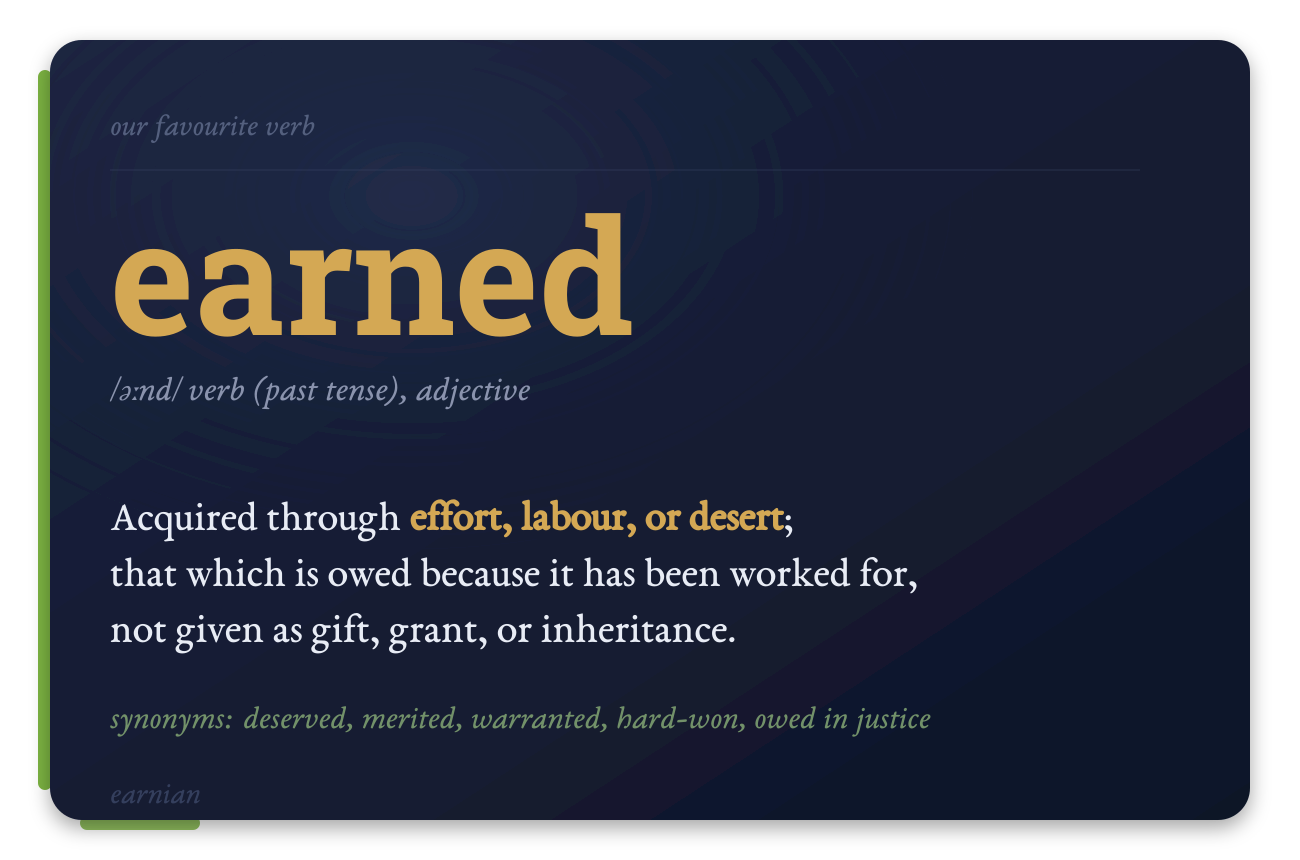
A LinkedIn post this week celebrated these numbers under the banner of “performance,” compensation that is “not fixed but earned.” Earned through “alpha.” Through scale. Through strategic positioning across global markets.
Reflect on that word: earned.
Now reflect on this: in the 24 years between 2000 and 2024, the average person in the bottom half of humanity saw their wealth increase by $585. In total. Not per year. Over a quarter of a century. The richest 1% captured 41% of all new wealth created in that period. The bottom 50% received just 1%.
These are the findings of the G20’s first-ever Global Inequality Report, published in November 2025 under the South African G20 Presidency. Authored by a committee led by Nobel laureate Joseph Stiglitz, joined by Jayati Ghosh, Imraan Valodia, Winnie Byanyima, Adriana Abdenur and Wanga Zembe-Mkabile. It names what we are living through as an inequality emergency. 2.3 billion people are moderately or severely food insecure. Billionaire wealth has hit the highest level in history.
$3.4 billion for one man. $585 for four billion people.
One of these numbers was celebrated on LinkedIn this week. The other was erased months ago.
The word “earn” comes from the Old English earnian, meaning to deserve, to merit, to labour for. Its deeper root is the Proto-Germanic aznon: to do harvest work. To serve. The Old Norse cognate önn means work in the field. The Old High German arnon means to reap. Earning was seasonal, cyclical, tied to the rhythms of the earth and the labour of the body. And from the same root: the Old English esne, meaning serf. Labourer. The people who originally earned were the lowest in the social order.
The word carried three meanings simultaneously, to deserve, to merit, and to labour for, and all three were inseparable. You earned because you laboured. You deserved because you served. “Deserve” comes from the Latin deservire, to serve well. “Merit” from merere, to earn, to serve. Every word we use to justify compensation has its roots in service and physical labour.
The word was made for the reaper. For the body in the field. For the person whose presence and whose labour was in the earth, and whose claim to a share of the harvest was undeniable.
When the LinkedIn post describes $3.4 billion in hedge fund compensation as “earned,” it is borrowing the weight of the field worker, the harvester, the serf, and draping it over returns generated by leveraged capital, algorithmic positioning, and regulatory architecture. The word is doing work that the economy itself has long since abandoned.
No one earns $3.4 billion. That figure is not a reward for effort. It is the product of an architecture: of financial deregulation, of tax systems redesigned to favour capital over labour, of trade rules written by and for the already powerful. Piketty showed us why: when the rate of return on capital consistently exceeds the rate of economic growth, wealth concentrates. Not through merit. Through structure. The hedge fund manager’s billions are sheltered by carried interest provisions that tax their returns at rates lower than those paid by the people who clean their offices. The LinkedIn post is celebrating this and calling it merit.
The G20 report names all of this. It calls extreme inequality a policy choice, not a force of nature. It proposes the establishment of an International Panel on Inequality, a permanent body to monitor inequality globally, modelled on the IPCC. President Cyril Ramaphosa, Prime Minister Jonas Gahr Støre and Prime Minister Pedro Sánchez are leading its establishment. A launch at the UN General Assembly is planned for July.
Within weeks of the report’s publication, under the incoming US Presidency, it was removed from the G20 website. A Guardian editorial linking to it now returns a 404 error. The page redirects to the G20 2026 homepage, where the photo shows something we are all increasingly familiar with and the tagline reads: “The Best Is Yet to Come.”
A report that names the inequality emergency, that documents how concentrated wealth corrodes democratic institutions, that proposes a permanent body to hold power to account, quietly deleted from the institutional record by the incoming presidency of the country whose financial architecture the report most directly challenges.
The report found that countries with high inequality are seven times more likely to experience democratic backsliding. The erasure of the report is itself an act within that spiral. The democracy-inequality feedback loop does not only operate through policy and legislation. It operates through what is allowed to be visible, what is permitted to be known, and what is quietly removed from the record when it becomes inconvenient.
But the report has not disappeared (you can find it here!).
The question is not whether $3.4 billion is a lot of money. The question is what kind of world produces it, and what kind of world it produces. And what kind of world erases the evidence when someone writes it down.
This is what the Stiglitz committee calls the inequality emergency. It is not a trend to be monitored. It is an architecture to be confronted.
On 22 April at 2pm UK, we are honoured to be hosting Imraan Valodia and Jayati Ghosh, two members of the G20 Extraordinary Committee that authored the G20 Global Inequality Report, in an Open Dialogue on what it takes to move from diagnosis to redesign. Our Open Dialogues are not webinars but places for deliberative, interactive conversation. This is not commentary after the fact. It is a contribution to the process while it is still being shaped.
This is an invitation to you to engage with the harder questions that the report raises and that the International Panel on Inequality establishment process is navigating. It takes place just days before the South Africa re-convening of the independent experts who wrote the G20 report, including Valodia and Ghosh, led by Nobel laureate Joseph Stiglitz. These consultations will shape the IPI’s public form, providing a consultative space that can inform the discussions happening there in the last week of April.
In Wax and Gold tradition, there are two meanings. The wax of the inequality conversation is well established: statistics published, reports launched, op-eds written. Yet the architecture that produces inequality remains largely intact. The gold is in the harder questions. This dialogue looks to ask them.
The Impact Trust Wax and Gold Open Dialogue Series 2026: The Inequality Emergency: From Report to Redesign Wednesday 22 April at 2pm UK on Zoom
This is part of series of conversations, the next one following on April 30th, The Invisible Economy: Inequality, Informality, and Democratic Space takes the conversation from the macro architecture of inequality into the structural conditions that make most of the world’s work invisible.
Last year’s Open Dialogues explored much of this architecture. You can find an overview of those dialogues here.