
Ended
📅 Join the next one.You can watch the recording of this dialogue on our YouTube Channel.
The “Resilience Beyond Aid” dialogue comes at what moderator Gerry Salole describes as a “Senterej moment” – a period of unprecedented simultaneous, rapid, and transformational change, catalysed by the dismantling of USAID and broader shifts in global power dynamics. This first of a trilogy of dialogues exploring Aid, Trade, and Philanthropy brought together development practitioners, academics, activists, and thought leaders for a profound examination of international cooperation’s future.
The 90-minute conversation, hosted by Impact Trust in partnership with Lucy Bernholz and Blueprint, took place against the backdrop of what participants described as a “military assault on our own people” in the United States, highlighting the broader context of democratic backsliding that frames contemporary development challenges. The discussion revealed not only the immediate crisis created by institutional dismantling but the deeper structural problems that have long plagued development cooperation – and the promising alternatives already emerging from the ground up.
Eddie Mandhry, Managing Director of Columbia University’s Centre for Innovation in Sports and AI, brought distinctive insights shaped by his journey from rural Kenya to American academia and philanthropy. His experience at Schmidt Futures and work on global strategy at Yale provided deep understanding of both philanthropic potential and systemic limitations.
Mandhry articulated a sophisticated framework challenging fundamental assumptions about development:
“What is the biggest imperative here? And I’m thinking more about moving beyond a singular Western centric system of development… this isn’t just a cultural sensitivity, it’s also about a pragmatic necessity for effective and sustainable transformation.”
“Its true purpose in this context is to cultivate critical thinking, creativity, self-determination and to empower individuals and communities to define and build their own future… nurturing local agency, not assimilating into predefined foreign models.”
“Innovation isn’t something imported, it’s everywhere… the most important and impactful solutions can arise from local contexts, leveraging indigenous knowledge systems and adapting to contemporary challenges.”
“Too often, aid frameworks begin with a deficit narrative, what communities lack or don’t have, and this fundamentally disempowers… this entire moment is demanding a shift to an assets-based approach focused on the immense human and societal capital already present.”
“When communities have the power to define their own problems, design their own solutions and control their own resources, I believe they’re more likely to build systems that are resilient, equitable, inherently regenerative.”
Mandhry highlighted a transformative but undervalued development finance mechanism:
“For Sub Saharan Africa… remittances reached about $54 billion per year in 2023 and that’s far exceeds overseas development assistance and foreign direct investment, which was around 30 billion… remittances are invisible power, they are largely unseen.”
He proposed “diaspora bonds, remittances linked financing models that are diaspora led” as pathways to leveraging African diaspora connections to disrupt traditional financial flows.
“Agency is not a buzzword, but it’s the absolute North Star for a regenerative future.”
Enrique Roig brought unparalleled insider knowledge, having served as Deputy Assistant Secretary in the State Department’s Bureau for Democracy, Human Rights and Labor (now eliminated), worked within USAID managing Central American programmes, and operated as an implementing partner in Colombia and Serbia. Crucially, he had been “always been a critic of US foreign assistance throughout my career, even given where I was and where I worked.”
Roig provided essential analysis of USAID’s elimination within broader authoritarian politics:
“USAID has been completely dismantled and is part of a larger political project of the Trump administration to essentially go after institutions that they don’t agree with. And USAID was an easy one to attack at the outset by Elon Musk and Doge, essentially, because there is no constituency for foreign aid in the United States.”
Despite defending humanitarian aspects of USAID’s work, Roig was frank about systemic problems:
“When you’re in the bureaucracy, you see a lot of the deficiencies… how USAID did procurements for programmes, the whole localisation strategy, often fell short… hundreds of thousands of dollars that would be spent on a bid… for $50 million programmes.”
He revealed a fundamental absence of domestic political support:
“Among the American public, specifically, there was no constituency for USAID … when you look at things, for example, where USAID is buying $2 billion worth of food commodities from US farmers in the Midwest, that’s significant, but not a lot of people knew about that.”
This revealed crucial misunderstandings: Americans believe foreign aid represents 20% of federal budget when it’s less than 1%; $2B in annual US farm purchases unknown to most constituents; veterans and small businesses benefiting from aid contracts lack awareness.
Roig distinguished between traditional and current approaches:
“US foreign policy has always been transactional… I think what we’re seeing now, though, however, it’s individualistic transactionality by our president, right? So, there is a difference.”
Despite challenges, he identified transformational potential:
“I think there is an opportunity now, at least for the United States, to build this constituency around US foreign assistance… How to translate all these great ideas, things that we’ve talked about today into policy proposals that can actually influence decision makers.”
Million Belay, General Coordinator of the Alliance for Food Sovereignty in Africa (AFSA), represented perhaps the most powerful example of successful grassroots organising discussed. AFSA encompasses “farmers networks, Fisher folks, pastoralists, indigenous people, women, faith-based institutions, consumer organisations” with a constituency of “about 200 million Africans” working in “50 of the 55 African countries.”
Belay provided concrete testimony of USAID’s problematic role:
“I’m not saying this because I’ve read this somewhere, but because I personally experienced it. I think I have participated in five or six meetings where USAID actually worked to water down the biosafety protocol agenda in Africa to make it open for those companies who are selling GMOs into Africa.”
He directly confronted condescending assumptions:
“Our farmers are not dumb. They know what they are doing enough in agriculture, but it doesn’t mean that we are romanticising also what they are doing… There is always an opportunity for conventional science and farmers knowledge to work together.”
AFSA exemplified sophisticated movement strategy:
“From the beginning, we always say that we work with two hands. On one hand we fight, and on the other we provide solutions.”
Fighting: Resisting draconian seed laws like “UPOV 91 which prevents farmers from saving their seeds”; challenging policies promoting dependency; countering narratives claiming, “Africa cannot feed itself without agrochemicals, without GMOs.”
Building: Pan-African seed systems; “My Food is African” campaign; policy engagement at continental levels; territorial markets supporting local food systems.
“We celebrate food. We celebrate seeds all over Africa. Celebration as a weapon of mobilising people, you know, and bringing also, also other actors.”
Belay raised critical questions about technological colonialism:
“What the technological advancement in the north is going to do, especially in the area of AI as a disruptive force… There’s always politics in technology. There is always a power relationships in technology.”
His concluding message emphasised African agency:
“In Africa we have to control our food system… food sovereignty is important. The good thing is we can demonstrate that we can feed ourselves.”
Lucy Bernholz, with 30 years as both participant and critic in institutional philanthropy, provided sharp structural analysis:
“I’ve become convinced over 30 years that one of the key reasons institutional foundations don’t change… is that fundamentally, institutional foundations are financial vehicles for rich people. That’s what they are.”
Bernholz posed crucial questions about movement evolution:
“How do you go about re-energising a movement, such a broad movement, from this antagonistic battle against an identified enemy to now you’ve got a moment. Let’s implement. Let’s go. Let’s fill the vacuum.”
She contrasted Million’s constituency of “over 400 million people… clearly a constituency… aligned around an understanding of Africa for Africans” with the US aid constituency’s “lack of a clear constituency to continue the work.”
Bernholz challenged the entire premise of external intervention:
“Sincere question: DOES any country do ‘foreign aid’ in a way that truly centres local agency? Given the initiating countries own self-interest?”
On technology: > “You must own and control the system, or it will own and control you. And it’s as true of AI as it is of Donald Trump’s personal money-making schemes now masked as American foreign policy.”
Her ultimate vision was transformational:
“Make the horizontals the law. Get rid of the NGOs. Make the horizontals the law.”
Alan Fowler, described by Mandhry as “a giant of an intellectual in the space,” identified a fundamental impediment:
“My observation over many years is that the professionalised aid system – both official and private nonprofit – has been unable to break away from being a self-referential enclave.”
“Let’s try and think horizontal more than vertical, because… it’s horizontal that has non agonistic cooperative power.”
Fowler distinguished between aid and remittances:
“The invisible transfers are quite substantial and very much more local agency enabling… it’s not just the quantity; it’s the quality of the money.”
He contrasted this with traditional aid: > “A lot of the International official aid has been low quality, unresponsive, predictive, linear.”
“I’ve only seen real NGOs move when there’s enough trauma. And one can perhaps look at what’s going on with USAID… as a trauma inducing opportunity.”
Fowler also connected contemporary discussions to historical African practices:
“One of the points I made resonates with an ontological perspective on gifting originating in Africa and eventually, thousands of generations of years later, philanthropy as we are speaking about it today.”
Lina Srivastava, whose work focuses on power dynamics in development, highlighted crucial distinctions often obscured in localisation discourse:
“The question of localisation is too often about… reforming and changing the way INGOs operate on the local level, not about advocates, community-based organisations, mutual aid organisations… Who are the people doing the actual work?”
“The ripple effect of the dismantling of USAID is not being discussed enough. There are ways that local organisations are activating and working right now.”
Srivastava highlighted emerging alternatives:
“There are amazing African organisation[s] who’s rethinking… power and mutual aid and community led narrative in ways that are really, really interesting. And you see that popping up all around.”
“Social movements and grassroots organising models, alongside horizontal distributed bodies, or rather as they grow into horizontal bodies, are crucial to support as we reimagine the way resources flow around the world for shared prosperity.”
Gibbons provided comprehensive structural analysis:
“The big issue is structural inequality cemented into place in a global system after World War Two… It is the global norm that structural inequality is not only acceptable but necessary to modern life, and we nibble along the edges. Bonkers”
“We need to turn our attention in two directions. One is the concept of TAPAS – There Are Plenty of Alternatives to unregulated global capitalism… and then we need to seed space for the proliferation and growth of grassroots movement-based sources of social innovation.”
“An Ethiopian gentleman, Faisal Miriam has invented a local organisation based in Kampala that raises block grants from international donors… then he re grants that money to clusters of African CBOs in East Africa… He’s building a movement. He has about a $20 million a year budget now.”
This model demonstrated: block grant approach reducing transaction costs; African leadership; cluster-based organising; peer-to-peer knowledge sharing.
“I think one of the challenges is that people are beholden to the ‘oppressive’ powers, especially in Africa… because of the dire need it feel like we don’t really have the luxury of principle. We go where the resources are. And this is why change is hard to have on purely ideological grounds. It needs to be financed.”
This revealed a critical tension: those who most need alternatives often can’t afford to refuse problematic funding, creating dependency cycles that maintain existing power structures. Later, she added:
“I think there is great work done it is just time to do things differently.”
Gerry Salole highlighted Africa’s most resilient institutional innovations:
“I’ve always been in love with the rotating credit and burial associations that Africa has so much of… from Cape to Cairo, from Lagos to Addis Ababa… This is one of the most powerful organising and mostly, though, strangely enough female led organisations that exist on the continent.”
These institutions (stokvels in South Africa, iqubs in Ethiopia, tontines in West Africa) exemplified:
Salole identified how institutional requirements undermine local solutions:
“When I started working for Save the Children in the 1980s one of my colleagues invented a two-page document we all used… They called it the log frame… The European Union now publishes a 27-page memo on how to fill in the bloody thing.”
Remittances Under Attack: The crisis now extends beyond aid. Alan Fowler noted: “Trump now wishes to tax remittances from the USA!!” Million Belay confirmed: “I read that in its BBB that was submitted to Congress BY TRUMP, there is a 3.55% TAX ON remittances.”
Across all contributions, genuine local agency emerged as the fundamental organising principle:
Vertical Characteristics (traditional aid/philanthropy):
Horizontal Characteristics (alternative models):
“vertical has agonistic power. horizontal has cooperative power”
Western-Centric Approaches: Single valid knowledge system; universal solutions; scientific expertise privileged over local knowledge; education as assimilation.
Pluralistic Approaches: Multiple valid knowledge systems; context-specific solutions; integration of scientific and indigenous knowledge; education as empowerment.
The discussion revealed multiple levels of dependency maintaining existing power structures:
Financial Systems:
Organising Models:
Knowledge Systems:
The “Resilience Beyond Aid” dialogue demonstrated that the current moment represents more than a crisis – it’s a potential inflection point toward fundamentally different forms of international cooperation. As Gerry Salole framed it, the crisis represents “an unprecedented opening for some kind of new approach that maybe integrates ideas and thought that has been on the periphery.”
Million Belay’s articulation of AFSA’s dual strategy offers the clearest model for transformation:
“From the beginning, we always say that we work with two hands. On one hand we fight, and on the other we provide solutions.”
This approach moves beyond critique to active construction of alternatives. Rather than simply opposing failed systems, movements can simultaneously build the alternatives that make those systems obsolete.
The dialogue demonstrated that the knowledge and capacity needed for transformation already exists. The challenge is not developing new solutions but creating conditions that allow existing solutions to flourish whilst maintaining their essential characteristics of community agency, horizontal organisation, and genuine local control.
The horizontal organising principles, quality-over-quantity resource flows, and epistemological pluralism discussed could inform new approaches to global challenges across all domains. As Salole observed, communities that have survived crisis and disruption may have crucial knowledge to offer the world. The African innovations highlighted – from rotating credit associations to continental food sovereignty movements – may offer crucial knowledge for communities everywhere seeking alternatives to extractive economic systems.
The discussion highlighted:
“The speed at which we didn’t learn lessons of covid, didn’t rethink things… and went back. was a painful moment… people did not take advantage of the moment – how do we do that now”
This time, the stakes may be too high to waste the opportunity for transformation.
The Senterej moment may represent humanity’s opportunity to finally orient international cooperation around genuine solidarity rather than domination, mutual aid rather than charity, and community agency rather than external control. The dialogue suggests this transformation is not only possible but already underway – the question is whether it can scale and federate whilst maintaining its essential characteristics.
“Agency is not a buzzword. It’s the absolute North Star for a regenerative future. And we are compelled in this very difficult, transformational moment to confront a fundamental truth around how do we create a sustainable, dignified transformation that can emerge with agency, the power to define, to decide, to act, resting unequivocally with local communities and individuals.”
The Senterej moment demands both resistance to harmful systems and active construction of regenerative alternatives. The expertise for this transformation already exists within communities worldwide. The institutions, knowledge systems, and organising principles needed for a post-aid world are not theoretical constructs but living realities operating across the Global South. Resilience beyond aid is possible – and it’s already happening.
Don’t forget dialogue 2 is coming up! Trade Systems in Crisis: Fragmentation and Failed Promises.
Date: July 15th, 2025
⏰ Time: 3.30 PM GMT / 4.30 PM CET / SAST / 10.30 AM ET / 7.30 AM PST
Register for the zoom link

Million Belay coordinates the Alliance for Food Sovereignty for Africa, a network of networks of major networks in Africa. He is a member of the International Panel of Experts on the Sustainable of Food Systems (IPES-Food). Million is a founder of MELCA – Ethiopia, an indigenous NGO working on issues of agro-ecology, intergenerational learning, advocacy and livelihood improvement of local and indigenous peoples. Million has been working for over two decades on the issues of intergenerational learning of bio-cultural diversity, sustainable agriculture, the right of local communities for seed and food sovereignty and forest issues. His main interest is now advocacy of food sovereignty, learning among generations, knowledge dialogues and the use of participatory mapping for social learning, identity building and mobilization of memory for resilience. He has PhD in environmental learning an MSc in tourism and conservation and a BSc in Biology.

Eddie Mandhry is a Senior Fellow at Schmidt Futures. He was most recently Director for Africa and the Middle East at Yale where he led the University President’s Africa Initiative, and advanced Yale’s bi-directional partnerships across Africa and the Middle East. Prior to joining Yale, he was the Associate Director of NYU Africa House, and the NYU Abu Dhabi Center for Technology & Economic Development. He is a Carnegie New Leader and has served on the Board of Trustees of the Carnegie Council for Ethics in International Affairs.

Enrique Roig is the former deputy assistant secretary in the Bureau of Democracy, Human Rights, and Labor at the US Department of State (DOS) where he oversaw the Bureau’s work on the Western Hemisphere and Africa. Previously, he served as senior advisor in the Office of the Under Secretary for Civilian Security, Democracy and Human Rights at DOS where he led the portfolio on Western Hemisphere migration and the Strategy to Prevent Conflict and Promote Stability. He also oversaw portfolios related to the Bureau for International Narcotics and Law Enforcement and the Bureau of Conflict and Stabilization Operations. Prior positions include director for Creative Associates’ global Citizen Security practice area where he oversaw major operations in Central America, the Caribbean, and North Africa. He also served as the senior citizen security specialist and coordinator for the Central America Regional Security Initiative (CARSI) at the US Agency for International Development (USAID), where he led USAID’s place-based initiative to reduce homicides in Central America. He has also more than 25 years of experience in 26 countries and has led politically sensitive human rights, elections, and citizen security initiatives worldwide. Roig holds an MA in international relations from American University in Washington, DC, and a BA in political science from Westmont College in Santa Barbara, California
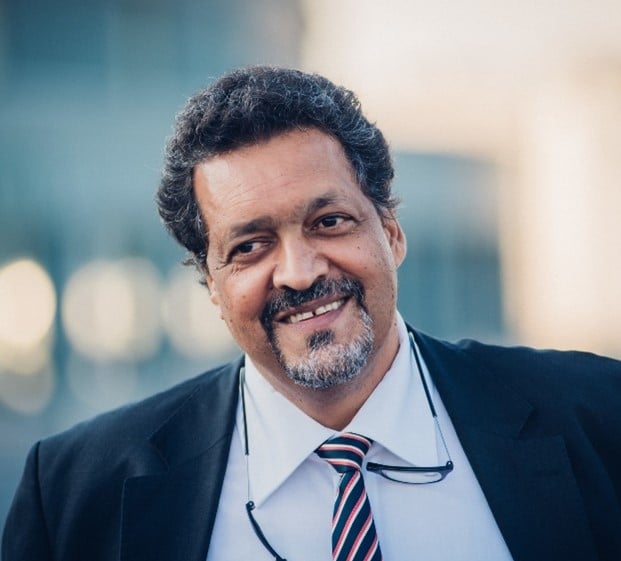
Gerry Salole is an independent consultant specialising in international development and philanthropy, currently operating through his consultancy, “drawing conclusions”. He previously served as Chief Executive of the European Foundation Centre and has experience of having worked with organizations such as the Ford Foundation, Save the Children and Oxfam. In addition to his consultancy work, Salole holds several board memberships, he’s the chair of the European Cultural Foundation, and sits on the Board of the Unicredit Foundation, The Evens Foundation, The Africa Capacity Building Foundation and the Impact Trust. He also teaches as an adjunct lecturer at the Centre for African Philanthropy and Social Investment at the Business School of the University of the Witswatersrand.