A provocation for The Invisible Economy: Inequality, Informality, and Democratic Space. A Wax and Gold Open Dialogue taking place on 30 April at 1pm UK.
With many thanks to Laura Alfers for her insignts and additions to this post.
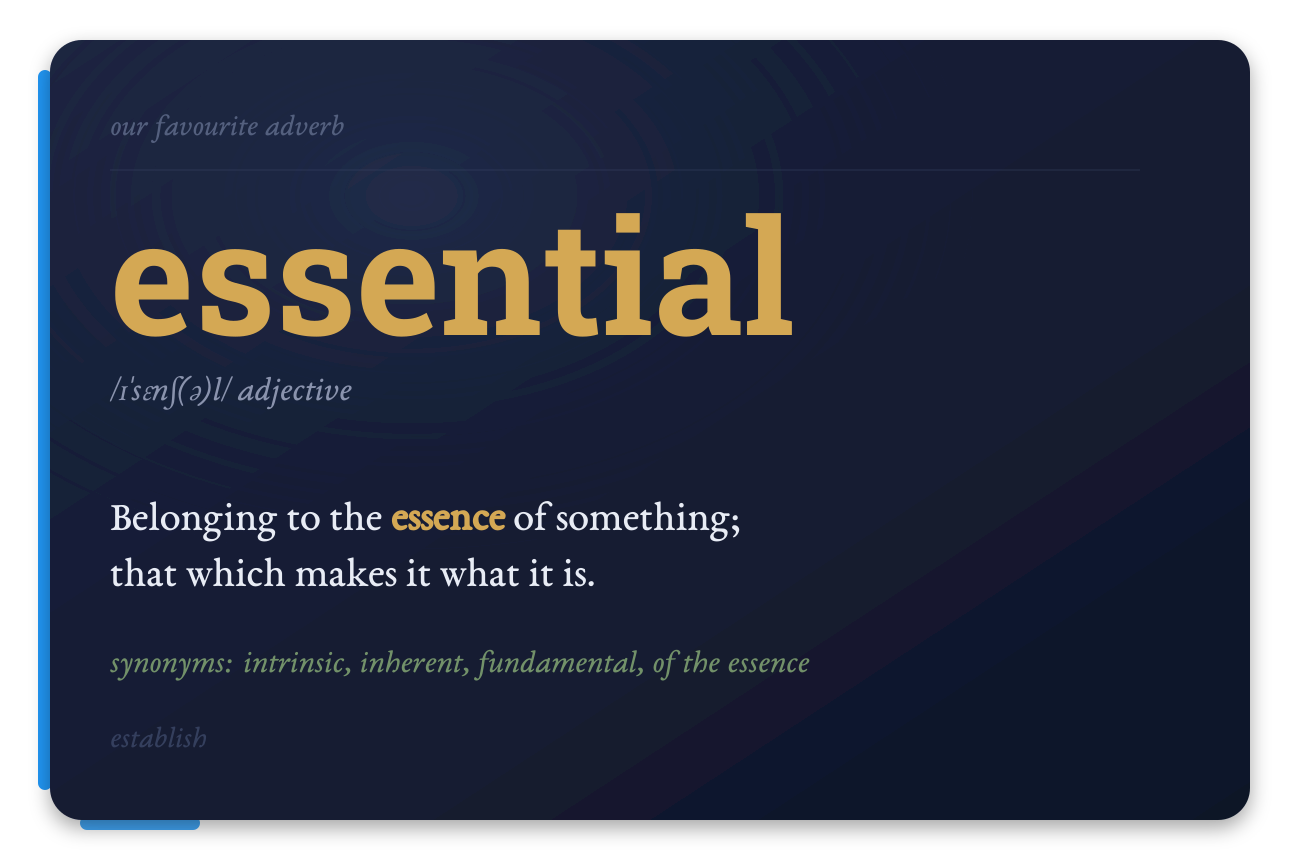
For much of 2020, the world discovered the phrase “essential worker.”
It applied it to care workers, cleaners, delivery drivers, waste pickers, food vendors. For a brief, disorienting moment, the people who kept society functioning were recognised as such. Then the crisis passed, and the word was quietly withdrawn. The workers remained. The recognition did not.
In our previous provocation, we asked what it means to “earn” $3.4 billion. We traced the word back to its roots in harvest labour, through Piketty’s formula showing how capital compounds while labour stagnates, through the architecture of financial deregulation that made such concentration possible, and through the erasure of the G20’s landmark inequality report from the very website of the institution it was written for.
That piece was about capital: how it captured the language of labour and used it to legitimise its own dominance. This piece is about what happens on the other side of that equation. What happens to labour itself, when the system that once exploited it begins to discard it altogether.
Piketty’s formula, r > g, describes a world in which capital dominates labour, outpaces it, but still coexists with it. What is emerging now is something more radical: capitalism is learning to generate returns without human contribution at all.
This is not hyperbole. It is a structural description. Financialisation, algorithmic trading, AI-driven productivity: the system is producing wealth that has no meaningful relationship to human effort. The hedge fund manager’s billions are not generated by a workforce. They are generated by capital deployed through technology, leveraged through architecture, and extracted through structures that operate largely beyond the reach of democratic accountability.
Indy Johar has written about this with precision. The dominant economic frame, he argues, treats the human being as a closed set of measurable capabilities, functions that can be listed, benchmarked, compared, and, once matched by machines, substituted. If a machine can do it cheaper, replacement is an optimisation decision. But this reduces the human to what can be counted. And what can be counted is never the whole of what matters. The care people bring, the networks they unlock, the atmospheres they shift, the silent capacities they enable: these defy the logic of substitution. In his essay “Beyond the Labour Society,” Indy names what is at stake: we are entering a post-labour society, and the question is not how to make labour more competitive with capital or with machines, but whether we can build an economy that recognises human contribution in forms that the current system was never designed to see.
Yet the system still reaches for the language of labour, of performance, of merit, of deserving, because without that language, the architecture would be visible. We would see it for what it is: not a reward system, but an extraction system. One that borrows the moral authority of labour while rendering labour itself disposable.
The forms of human contribution that actually hold societies together, care, trust, relational capacity, the quiet daily work of making life liveable, are precisely the contributions that this system does not count, does not compensate, and does not see. But this is not the whole story. These are not only social contributions that sit alongside “the real economy.” They are integral to how that economy functions, how value is produced, distributed, and sustained.
Over 60% of the world’s workers operate in conditions of informality and outside of the standard employment relationship, not because they have chosen to be outside the system, but because the legal and institutional framework was never built to see them. All labour law assumes the presence of an employment relationship; without it, the entire architecture of worker protection falls away. But what falls away in law does not fall away in practice. These workers are not peripheral. They are central to production systems, to urban economies, to supply chains, to service delivery, to the provision of care. They are the real economy, not only in moments of crisis, when they are called “essential,” but every day.
The G20 inequality report counts the wealth gap. But it does not fully count the recognition gap. A system that can allocate $3.4 billion to a single fund manager, and celebrate that allocation as earned, but cannot see the care worker, the street vendor, the waste picker, the subsistence farmer; a system that counts alpha but not attunement, that measures leverage but not love: this is not simply unequal. It is structurally blind. And its blindness is not accidental. It is designed.
As Jayati Ghosh argued in yeasterday’s dialogue, poverty and inequality are not separate problems but two sides of the same architecture: the policies that make some lives more fragile are the same policies that enrich those who benefit from that fragility.
The inequality emergency is not only about the gap between the billionaire and the dispossessed. It is about a system that has narrowed its understanding of what constitutes production and value, and in doing so, has made the majority of workers legible only as residual, informal, or relational. The task is not just to see them. It is to fundamentally reconfigure how value itself is defined, measured, and governed. It is about a system that has lost the ability, or the willingness, to recognise what human contribution actually looks like, and has redesigned the language of value to ensure it never has to.
This is the territory of our Open Dialogue on 30 April, ahead of Workers’ Day.
The G20 report describes the macro architecture of inequality: who holds the wealth, how it accumulated, what policies produced it. But the lived experience of inequality is not primarily a story of hedge fund returns and Gini coefficients. It is a story of work that is done but not counted, of contribution that is essential but not recognised, of people who sustain the functioning of entire economies while remaining invisible to the institutions designed to protect them.
The informal economy is not an anomaly within global capitalism. It is its foundation. In much of the Global South, informality is not the exception but the norm. Markets function, goods are produced and distributed, care is provided, waste is managed, food reaches tables, all through labour that operates without contracts, without protections, without representation. The system depends on this work. It simply refuses to see it.
And this invisibility is not passive. It is actively produced. Trade agreements are structured around formal employment. Tax systems are built on the assumption of registered enterprises. Social protection is tied to payroll. Public procurement privileges the formal enterprise. International development metrics measure what can be captured in systems of national accounts. Everything that falls outside these frames, which is to say, the majority of the world’s working life, is rendered structurally illegible. Not hidden. Not underground. Simply not counted.
In yesterday’s Inequality Emergency dialogue, Laura Alfers named public procurement as one of the clearest levers through which this exclusion is engineered. Imraan Valodia, co-lead of the G20 report, pointed to the deeper finding: since 1980, wealth held in public hands has remained static, while wealth held in private hands has grown roughly fivefold. Procurement is one of the principal channels through which that transfer happens, and the informal workers whose labour produces, distributes, and sustains much of that value never appear in the ledger.
The people most affected by the inequality emergency are the least visible within the systems designed to address it. This is not a paradox. It is the architecture working as intended.
If the first provocation asked what it means to earn, this one asks what it means to contribute.
The word “essential” surfaced something that the system normally suppresses: the recognition that the people who sustain daily life, who hold communities together, who do the work without which nothing else functions, are doing something of immense value. But recognition without structural change is just performance. Calling someone essential and then returning them to invisibility is not an oversight. It is the wax.
The gold is in asking what an economy built around contribution rather than extraction would actually look like. How do we ensure that what gets measured is not just what is produced, but what actually sustains economies — and that this recognition translates into the legal and institutional redesign needed to include the majority of the world’s workers? What would it mean to design social protection that does not depend on an employer-employee relationship that most of the world’s workers have never had? What would it mean to take the recognition that surfaced during COVID and make it permanent, institutional, structural?
These are not abstract questions. They are design questions. And they are being asked with growing urgency by movements of informal workers organising on the ground, and by the bodies now rethinking how prosperity itself is measured.
On 30 April at 1pm UK, The Impact Trust hosts the second in our series of dialogues on the inequality emergency: The Invisible Economy: Inequality, Informality, and Democratic Space.
This dialogue takes the conversation from the macro architecture of inequality into the structural conditions that make much of the world’s work invisible. Moderated by Jo Swinson of Partners for a New Economy (P4NE), it will engage Laura Alfers of WIEGO, Laila Iskander, and Naila Kabeer, a member of the UN Secretary-General’s High-Level Panel on Rethinking GDP. Together they bring perspectives that span the global policy architecture, the organising of informal workers, and the lived experience of building recognition from the ground up.
If the first dialogue asked how we move from report to redesign, this one asks: redesign for whom? And by whom? The people most affected by inequality are not waiting for institutions to see them. They are building their own visibility. The question is whether the rest of the system is willing to be redesigned by what they reveal.
In Wax and Gold tradition: the wax is the world calling workers “essential” and then forgetting them. The gold is what it would take to build systems that remember.
🔗 Read more and register here
The Impact Trust | Wax and Gold Open Dialogue Series 2026
The Invisible Economy: Inequality, Informality, and Democratic Space
Wednesday 30 April | 1pm UK | On Zoom